HomeownerOctober 28, 2026 · 12 min read
Is Myrtle Beach a Good Airbnb Investment? An Owner's Guide
Table of Contents
Yes, Myrtle Beach can be a good Airbnb investment, especially for buyers who choose carefully right now. It's the largest short-term rental market in South Carolina, drawing about 17.8 million visitors a year, and a typical rental books about 55% of its nights at around $280 a night. Condo prices in the city are down about 11% from last year, which gives buyers more room to negotiate than they've had in years. The properties that perform best share three things: they're legal to rent, bought at the right price, and run well all year.
This guide walks through the real numbers, including the costs that catch new owners off guard, so you can test a specific property before you make an offer.
This is general information, not financial, legal, or tax advice.
Why Do Investors Look at Myrtle Beach for Airbnb Rentals?
Because the demand is real and it's big.
- About 17.8 million people visited the Myrtle Beach area in 2025 and spent roughly $13.3 billion.
- Horry County collects close to 30% of all accommodations tax in South Carolina. No other county comes close.
- Myrtle Beach International Airport handled about 3.5 million passengers in 2025, with ten airlines flying nonstop to more than 50 cities.
- Most visitors still drive in. A large share of the East Coast is within a day's drive.
- Horry County's population is up about 18% since 2020, which adds residents, visiting family, and buyers looking for a second home.
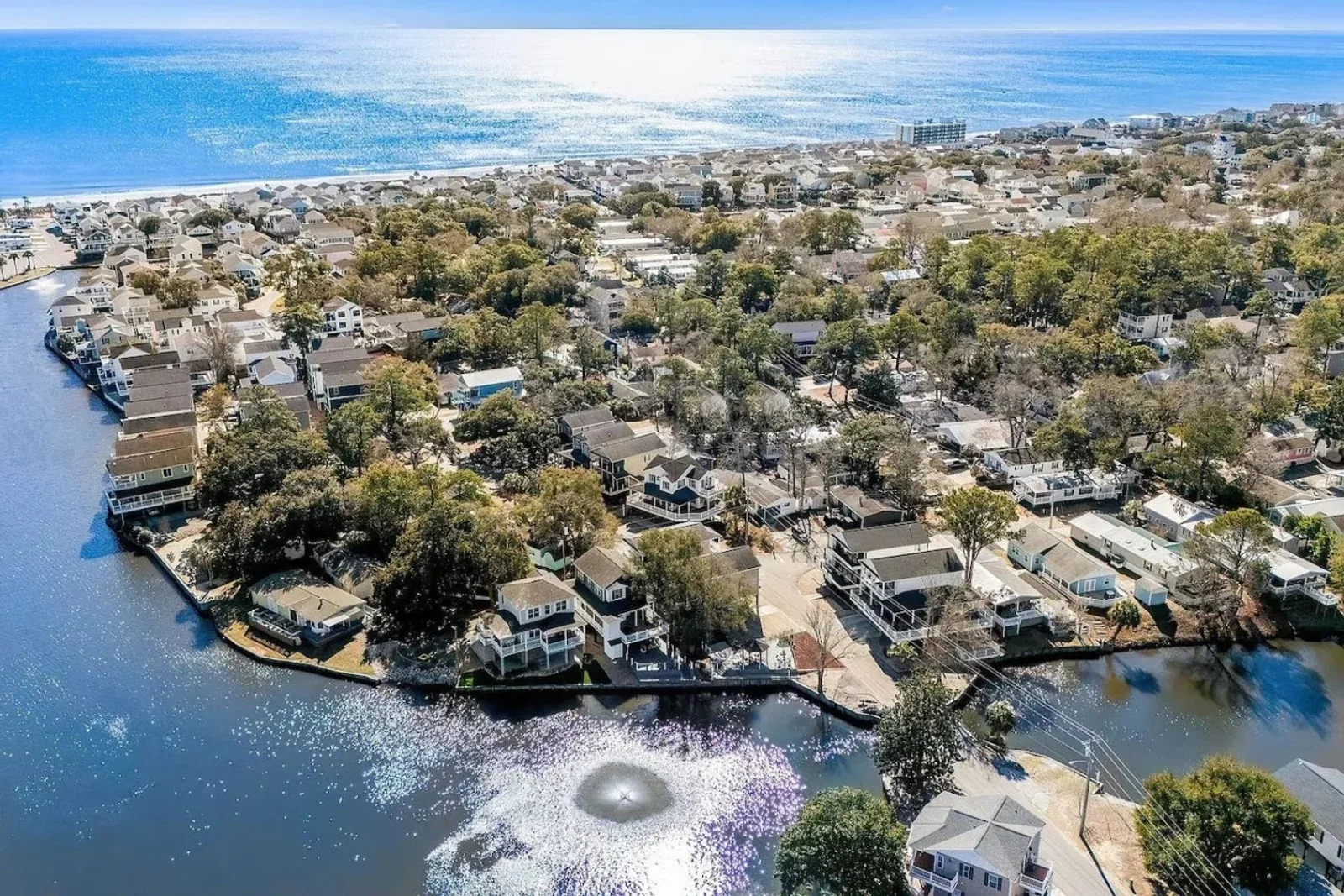
Myrtle Beach is also the largest short-term rental market in South Carolina, with roughly 19,600 active listings across Airbnb, Vrbo, and Booking.com, according to AirDNA market insights. Those market figures cover the wider Myrtle Beach area, so the rules for a specific address can differ from town to town.
The market is competitive. Visitor numbers dipped about 3% in 2025 and hotel occupancy fell 3.3%, while active short-term rentals grew about 7% in a year. With more units chasing a similar number of guests, the listings that win are the ones that are priced, presented, and run well.
Demand gives Myrtle Beach a strong foundation. The property you choose decides how much of it you capture.
Looking at a Myrtle Beach property and not sure the numbers hold up? Book an investment consult with Leisr Stays. We'll check the zoning, read the HOA documents, and build a realistic estimate for the full year for that exact unit before you make an offer.
Test a Myrtle Beach property before you buy
- Zoning and license check for the exact address
- HOA documents and assessment risk reviewed
- A full year estimate, not just a summer one
Can You Legally Run an Airbnb in Myrtle Beach?
Yes, in the right locations. In the City of Myrtle Beach, the answer starts with zoning, and most traditional residential neighborhoods aren't zoned for short-term rentals.
The city defines a short-term rental as a stay of fewer than 90 consecutive days. Zoning districts that start with R, for residential, don't allow them, with one exception: RMV, Residential Multifamily Visitor. Most legal short-term rentals in the city sit in condo, resort, and visitor districts along the oceanfront and the Golden Mile corridor, which is also where most of the rental demand is.
What catches buyers off guard:
- A Myrtle Beach mailing address is not a zoning determination. The city, North Myrtle Beach, Surfside Beach, and unincorporated Horry County each have their own rules, licenses, and local taxes.
- A neighbor's Airbnb is not permission for your lot. A small number of houses in residential zones are grandfathered, and that status belongs to the house.
- Business licenses don't transfer with a sale. You apply in your own name, and the city checks zoning before it issues one.
- Your HOA can be stricter than the city. Some buildings set minimum stays or have tightened rental rules in the last few years.
We cover zoning, licensing, and penalties in our guide to Myrtle Beach short-term rental regulations.
How Much Can a Myrtle Beach Airbnb Earn?
Here's what the market looks like over the last 12 months:
- Average nightly rate: about $280 per booked night
- Occupancy: about 55% of available nights
- Revenue per available night: about $154
- Average gross revenue: about $43,000 per active listing per year, before any expenses
Treat that $43,000 as a ceiling for an average unit, not a forecast. It includes cleaning fees guests pay, and other data trackers that count every calendar night, or only listings booked all year, put the typical Myrtle Beach listing closer to $21,000 to $34,000 a year. The spread is the point: the average hides a huge range, and well chosen, well run units sit at the top of it.
What moves a unit up or down that range:
- Oceanfront vs. second row: Direct ocean views and balconies command the highest rates, especially in summer.
- Bedrooms and sleeping capacity: Family and group trips drive this market. A three bedroom unit that sleeps 10 earns very differently from a studio.
- Building amenities: Lazy rivers, indoor pools, and kids' areas matter to families choosing between nearly identical units.
- Operations: Pricing, photos, reviews, and response times often separate two identical units in the same building more than the view does.
How Seasonal Is the Myrtle Beach Airbnb Market?
Very. AirDNA market insights score Myrtle Beach 42 out of 100 for seasonality, where lower means sharper swings between peak and slow months.
You can see the swing in airport traffic alone. In 2025, Myrtle Beach International Airport saw about 232,000 departing passengers in August and about 73,000 in January. That's roughly three times the traffic in peak summer.
The year breaks down like this:
- Summer (June to mid-August): Peak rates, weekly family stays, and most of the year's profit.
- Spring and fall: Golf trips, youth sports tournaments, bike rallies, and shoulder season travelers fill weekends at lower rates.
- Winter (roughly November to February): Fewer bookings and heavy discounting. Snowbird monthly stays help some buildings, but at a fraction of summer rates.
This is why a look at summer alone misleads. The unit has to cover its bills in January too, and owners who price the shoulder seasons well are the ones who come out ahead.
What Does a Myrtle Beach Airbnb Actually Cost to Own?
Prices have come down, which is good news for buyers. Across the Grand Strand, the median condo sold for about $232,000 so far in 2026, and condo inventory sits around 7.5 months of supply, a clear buyer's market. Inside Myrtle Beach's main ZIP codes, the condo median is closer to $205,000, down about 11% from last year. Houses in those same ZIP codes run about $520,000.
The costs that decide the deal:
- Regime (HOA) fees: Roughly $200 to $450 a month for second row or inland condos, $400 to $800 for standard oceanfront buildings, and $600 to $1,500 or more for towers with full amenities. Many buildings raised fees 10% to 30% in a single year, driven mostly by insurance.
- Special assessments: Older oceanfront towers facing roof, elevator, or balcony work have hit owners with assessments of $20,000 or more per unit. South Carolina doesn't require condo reserve studies or a standard resale disclosure packet, so you have to ask for the budget, reserves, and board minutes yourself.
- Insurance: Wind and hail coverage on coastal master policies has climbed sharply, and wind deductibles of 2% to 5% of value get passed to owners as assessments. You'll also need your own unit policy, flood coverage where required, and liability coverage written for short-term rentals.
- Property tax: South Carolina taxes a rental or second home at a 6% assessment ratio, versus 4% for a primary residence, so expect a noticeably bigger bill than an owner who lives there pays.
- Lodging taxes: Inside city limits, guests pay 5% state sales tax, 2% state accommodations tax, the city's 0.5% accommodations tax and 1% hospitality fee, and Horry County's 1.5% hospitality fee, plus any local sales tax. Platforms collect some of this, not always all of it.
- Financing: 30-year mortgage rates moved back above 7% this fall, and loans for investment properties usually price higher and need 20% to 25% down.
- Management: Full service vacation rental management typically runs 20% to 35% of gross rental income.
Does the Math Work? Two Sample Myrtle Beach Condos
| Condo A: average deal | Condo B: strong deal | |
|---|---|---|
| Purchase price | $230,000 | $190,000 |
| Down payment | $57,500 | $47,500 |
| Gross revenue | $43,000 | $51,600 (20% above average) |
| Management (25%) | $10,750 | $12,900 |
| Regime fees | $6,000 | $6,000 |
| Cleaning, linens, and supplies | $6,000 | $6,000 |
| Utilities, internet, and streaming | $3,600 | $3,600 |
| Property tax (assumed) | $2,800 | $2,300 |
| Unit insurance and flood (assumed) | $2,000 | $2,000 |
| Maintenance reserve | $2,000 | $2,000 |
| Left before the mortgage | $9,850 | $16,800 |
| Mortgage payment | $14,100 | $11,700 |
| Yearly cash flow | about −$4,300 | about +$5,100 |
| Cash return on the down payment | negative | about 11% |
Illustrative examples with stated assumptions, not a forecast.
Here's the same standard oceanfront condo bought two ways. The first is bought at a typical price and earns the market average. The second is bought for less and run better than average. Both use 25% down, a 30-year loan at 7.25%, management at 25%, and regime fees of $500 a month.
The difference comes down to one comparison. Condo A earns about 4.3% on its purchase price before financing, less than the 7.25% its loan costs, so borrowing makes the result worse. Condo B earns about 8.8%, more than its loan costs, so the loan works in the owner's favor.
A few things to keep in mind:
- Both examples leave out furnishing and closing costs, and Condo B assumes cleaning costs stay level with more bookings.
- Condo A uses the optimistic $43,000 figure. At $34,000, closer to what other trackers report, it would run about $11,000 a year out of pocket.
- A $25,000 special assessment would erase about five years of Condo B's cash flow, which is why the HOA documents matter as much as the price.
- Cash flow isn't the only return. Each mortgage payment also pays down principal, about $1,400 to $1,700 in the first year in these examples, and rental owners may benefit from depreciation. Talk with a CPA about how that applies to you.
That's the real lesson. In Myrtle Beach, the purchase price, the building's finances, and how well the unit is run matter more than the market itself.
Want to know which column a specific unit falls into? Leisr Stays can review the zoning, the HOA documents, and a realistic estimate for the full year before you make an offer.
Test a Myrtle Beach property before you buy
- Zoning and license check for the exact address
- HOA documents and assessment risk reviewed
- A full year estimate, not just a summer one
Condo or House: Which Myrtle Beach Property Type Fits Your Goals?
Condos are the most common short-term rental in the city because so many sit in zones that already allow them. They're cheaper to buy, the HOA handles the exterior and pools, and prices are softer right now. The tradeoff is the building: fees, insurance, assessments, and rental rules can change after you buy.
Houses offer more space and appeal to bigger groups, and they aren't exposed to a condo board's insurance bill. But in the City of Myrtle Beach, few houses are in zones that allow short-term rentals, and they cost more than twice the condo median. Many investors who want a house look at North Myrtle Beach, Surfside Beach, or Garden City instead, where different rules apply.
One question for every showing: "If this unit only books well in summer, does the math still work?"
What Are the Risks of Investing in a Myrtle Beach Airbnb?
Every market has risks. Here's how the main ones show up in Myrtle Beach, and how careful owners manage them.
- Seasonality: Summer carries most of the profit, so one weak summer can undo the year. Owners who budget for the full year and price spring and fall well are far less exposed.
- Supply growth: Active listings are up about 7% in a year while visitor counts dipped. Listings with strong photos, reviews, and pricing hold their occupancy best.
- HOA and insurance costs: Fee jumps and special assessments are the most common surprise for condo owners right now. Reading the budget, reserves, and board minutes before you buy is the best protection.
- Hurricanes: Storms bring cancellations, possible damage, and higher premiums. Hurricane season runs June through November, with the most activity from August through October. The right insurance, a storm plan, and a local team limit the impact.
- Rule changes: Cities and HOAs can change rental rules. Buying where rentals are clearly allowed lowers this risk. Read older articles carefully, since a proposed rule isn't an adopted one.
- Falling condo prices: Prices have been sliding in parts of the market. That's good for buying, but don't count on appreciation to rescue a thin deal.
No market makes a weak property a good investment. In a strong market like this one, the right property can be.
Myrtle Beach Airbnb Investment Checklist
Use this during due diligence, not after closing:
- Confirm zoning in writing and which government covers the parcel
- Get the HOA's rental rules, budget, reserve study (if any), insurance policy and deductible, and 12 to 24 months of board minutes
- Ask about any recent, pending, or discussed special assessments
- Request the seller's actual booking history and payouts, not a projection
- Get insurance quotes, including wind and flood, before closing
- Price the property tax at the 6% rental assessment ratio
- Line up the business license and tax registrations in your name
- Get a realistic estimate for the full year from a local manager
How Leisr Thinks About Myrtle Beach Investments
At Leisr Stays, we provide vacation rental management in Myrtle Beach, and when an owner asks if a property makes sense, we start in the same place every time: the parcel, the building's finances, and the full year, not just July.
That means confirming the unit can legally be rented, reading the HOA documents for fee and assessment risk, and building an estimate that holds up in January. Our goal is to bring the attention of the host down the street with the capability of a national operator, so the home performs in every season.
If you're weighing a Myrtle Beach property, talk with Leisr Stays about realistic numbers for that specific home.
General information only, not financial, legal, or tax advice. Rules, rates, and taxes change, so confirm current requirements with the relevant local government and qualified advisers before you buy.